Mold Remediation
Bathroom Mold Remediation in Miami: What Homeowners Should Know
By Clear Restoration · · 6 min read
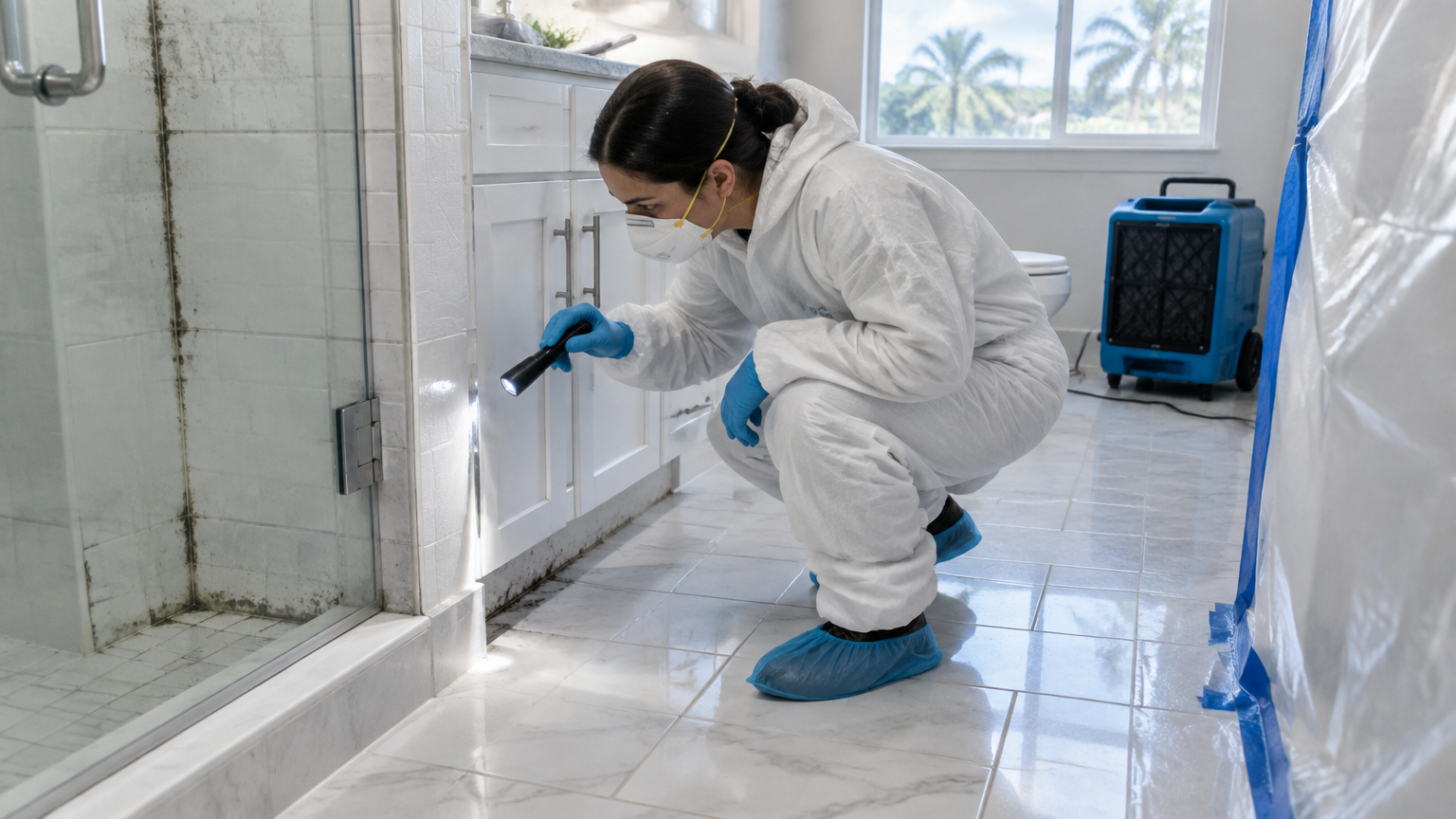
A few dark spots in the grout are easy to ignore. But when they keep coming back no matter how often you scrub, or the bathroom has a musty smell that never quite goes away, there may be more going on behind the tile. Bathroom mold remediation in Miami is about more than cleaning what you can see. It means finding where the moisture is coming from, removing affected materials safely, and drying the space so the problem does not return. Here is what causes bathroom mold, what to avoid, and how a professional remediation actually works.
Why Bathrooms Are a Mold Magnet in South Florida Homes
Every bathroom deals with water and steam every day. Hot showers fill the room with moist air, and that moisture settles on walls, ceilings, grout lines, and the back of the vanity. In Miami, the air outside is often already humid, so bathrooms can stay damp much longer, especially when the exhaust fan is weak or missing.
Bathrooms also hide a lot of plumbing. Supply lines, shower valves, drain connections, and the wax ring under the toilet all sit behind walls, under floors, or inside cabinets. A slow leak in any of those spots can keep drywall, wood, and subfloor wet for weeks before anyone notices. That combination of steam and hidden plumbing is why bathrooms are such a common spot for mold in Miami, Hialeah, Doral, and Kendall homes.
Common Causes of Bathroom Mold
Every home is different, but bathroom mold usually traces back to one of these moisture sources:
- Poor ventilation, like an undersized exhaust fan or one that vents into the attic instead of outside
- A slow leak from a shower valve, supply line, or drain connection behind the wall
- Cracked or missing grout and caulk that let water seep behind tile
- A failing wax ring or toilet supply line that keeps the floor damp
- Leaks under the vanity that soak the cabinet base
- A past water leak or storm intrusion that was never fully dried
Surface Mildew or a Bigger Problem?
A little discoloration on the surface of caulk or grout in a shower can sometimes be handled with regular cleaning and better ventilation. The concern is growth that comes back right after cleaning, spreads beyond the shower, or shows up on drywall, ceilings, or cabinets.
These signs suggest the moisture may be coming from inside the wall or floor, not just from steam:
- A musty smell that lingers even when the bathroom is clean and dry
- Peeling paint, bubbling, or soft spots on the wall next to the tub or shower
- Staining on the ceiling below an upstairs bathroom
- Loose tiles, cracked grout, or a floor that feels spongy near the toilet
- Warped or stained wood inside the vanity cabinet
What Not to Do When You Find Bathroom Mold
It is natural to reach for a spray bottle and start scrubbing. With mold that goes beyond a small surface spot, a few common moves can spread spores or hide the real problem.
- Do not pour bleach on drywall or wood and assume the problem is solved, because it does not fix the moisture source
- Do not tear out drywall or tile yourself, which can release spores into the rest of the home
- Do not paint or caulk over stains without finding out why they are there
- Do not ignore a musty smell just because you cannot see anything yet
How Bathroom Mold Remediation in Miami Works
A professional remediation starts with an inspection. Technicians look at the visible growth, then use moisture mapping and a visual walkthrough to find out how far moisture has traveled behind tile, under flooring, and inside the vanity. When it is helpful, third-party air sampling is available before and after the work.
Once the affected area is defined, the bathroom is set up with containment so spores stay in the work area instead of drifting into bedrooms and hallways. HEPA filtration and negative air help keep the rest of the home protected. Affected porous materials, like moldy drywall or swollen cabinet bases, are removed and bagged. Remaining surfaces are cleaned, and an antimicrobial treatment may be applied to at-risk areas to help slow regrowth.
Drying comes next. Dehumidifiers and air movers bring wall cavities and framing back to a dry condition, with readings taken along the way to confirm the materials are actually dry before anything is closed up. Our post on where water damage hides after a leak explains why that verification step matters so much in tight spaces like bathrooms.
Fixing the Cause So Mold Does Not Come Back
Remediation without fixing the moisture source is only a temporary fix. If a shower valve is leaking, it needs to be repaired. If the exhaust fan is not moving air outside, ventilation needs attention. Clear Restoration corrects the humidity and leak conditions it finds and provides a written plan to help keep the space dry.
After the work is done, a few habits help a lot in a humid Miami bathroom. Run the exhaust fan during showers and for a while after, keep caulk and grout in good shape, wipe down standing water, and keep an eye on the area under the sink. Our guide to humidity control after mold remediation and our post on the signs of hidden mold in your home cover what to watch for. If you notice a musty smell from the A/C as well, our article on A/C closet mold is worth a read.
A Cautious Word on Insurance
Insurance for mold is not one size fits all. Many homeowners policies limit or exclude mold, while mold that follows a sudden covered water loss, like a burst supply line, may be treated differently. Coverage varies by policy, so review yours and talk with your agent or adjuster about what applies.
What you can control is documentation. Take photos of the growth and any visible leak before anything is moved. Clear Restoration documents the inspection, provides a written scope of work, and communicates with your adjuster when a claim is involved.
Bathroom Mold Help Across Miami-Dade and South Florida
Clear Restoration is locally owned and has served South Florida since 2013, with 24/7/365 help for homeowners in Miami, Miami Beach, Hialeah, Coral Gables, Doral, Kendall, Homestead, Aventura, and across Miami-Dade, Broward, and Palm Beach counties. Along with mold remediation, the team provides water damage restoration for leaks and flooding, and fire and smoke restoration when a home has other damage to deal with. If your bathroom mold started after a leak, our guide to the first 24 hours after water damage can help you plan your next steps.
Seeing mold in your bathroom that keeps coming back? Call Clear Restoration at (305) 828-0287 for 24/7/365 mold remediation help across South Florida. Avoid scrubbing or tearing out materials yourself, keep the door closed, and let the team inspect the area, find the moisture source, and build a documented remediation plan.
Frequently asked questions
Can I remove bathroom mold myself?
Small surface spots on grout or caulk can sometimes be cleaned with regular bathroom cleaners and better ventilation. When mold keeps coming back, spreads to drywall or cabinets, or comes with a musty smell, professional inspection and remediation is the safer choice.
Why does mold keep coming back in my shower?
Recurring mold usually means moisture is still getting in, often from poor ventilation, failing grout or caulk, or a leak behind the wall. Cleaning the surface does not fix the source.
Does homeowners insurance cover bathroom mold remediation?
It depends on your policy and the cause. Many policies limit or exclude mold, and gradual leaks are often treated differently from sudden ones. Review your policy and ask your agent or adjuster what applies.